


The Real Difference Between Gauchos and Cowboys
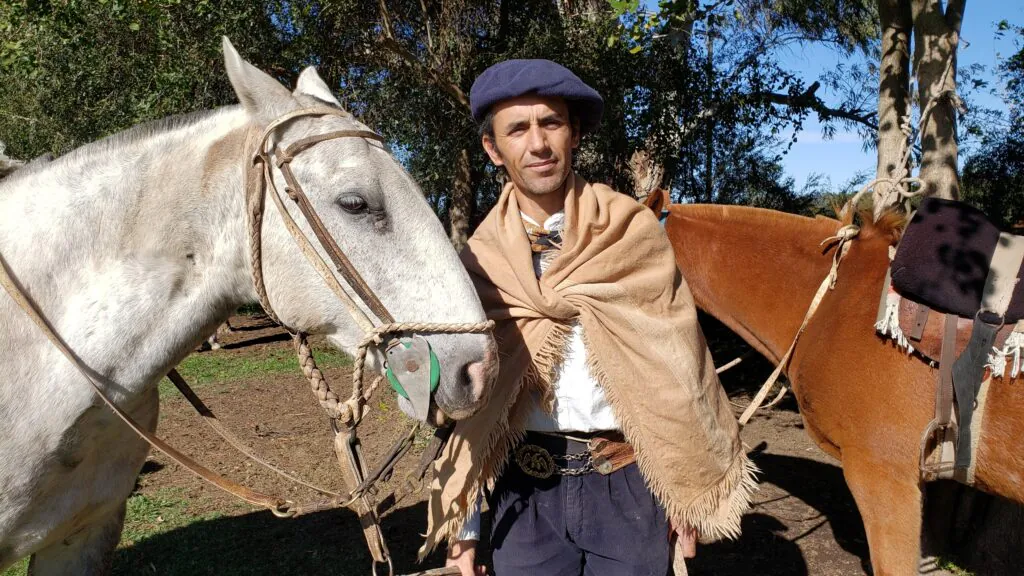
While both figures represent the archetypal horseman of the Americas, the main difference between Gauchos and Cowboys lies in their geography, tools, and cultural roots. The Cowboy is the icon of the North American Wild West, known for using the lasso, firearms, and herding cattle across the Great Plains. In contrast, the Gaucho is the nomadic master of the South American Pampas (Argentina, Uruguay, and Southern Brazil), historically relying on the facón (knife) and boleadoras for hunting and defense, deeply rooted in a solitary, mestizo culture.
Origins and Territory: Plains vs. Pampas
To understand the man, you must understand the land. The American Cowboy rose to prominence primarily in the mid-to-late 19th century. They were the engine of the cattle drives, moving herds from Texas to railheads in Kansas. Their terrain was the arid, rugged Great Plains and the Rockies.
The Gaucho, however, has a history that stretches back further, emerging in the 18th century. We roam the Pampas, a vast, flat, and fertile grassland that feels like an endless green ocean. Unlike the often organized cattle drives of the US, the early Gaucho was a true nomad, living off the feral cattle (cimarrón) that populated the plains naturally.
The Gear: Tools of the Trade
This is where the distinction becomes sharpest visually. While both are expert riders, their equipment evolved differently to solve unique problems.
The Lasso vs. The Boleadoras
The Cowboy is synonymous with the lasso (or lariat). It is their primary tool for roping calves and managing the herd. Their skill with a rope is legendary and central to the rodeo culture we see today.
The Gaucho also uses a lasso, but our signature weapon is the boleadoras. This ancient tool, adapted from indigenous peoples, consists of three stones wrapped in leather and tied together. We throw them at the legs of an animal to tangle and immobilize it. It requires a different kind of precision and speaks to our hunting roots.
Firearms vs. The Facón
In the Hollywood image of the Cowboy, the Colt revolver or the Winchester rifle is never far away. The Wild West was tamed with gunpowder.
For the Gaucho, the firearm is secondary. Our extension of the arm is the facón. This is not just a knife; it is a long blade used for eating, working leather, and fighting. In a duel, a Gaucho uses his poncho wrapped around one arm as a shield and the facón in the other. It is a symbol of honor and masculinity in the Argentine countryside.
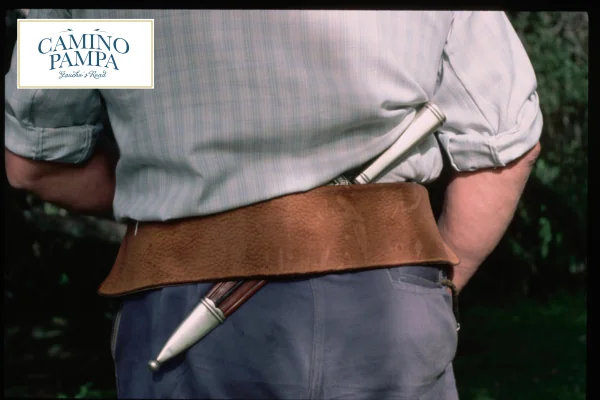
Clothing: Bombachas vs. Jeans
If you spot a rider from a distance, the silhouette tells the story.
Cowboys are famous for their denim jeans (often Wrangler or Levi’s), chaps for protection against brush, distinct high-crowned hats (Stetsons), and heeled boots designed to stay in the stirrup.
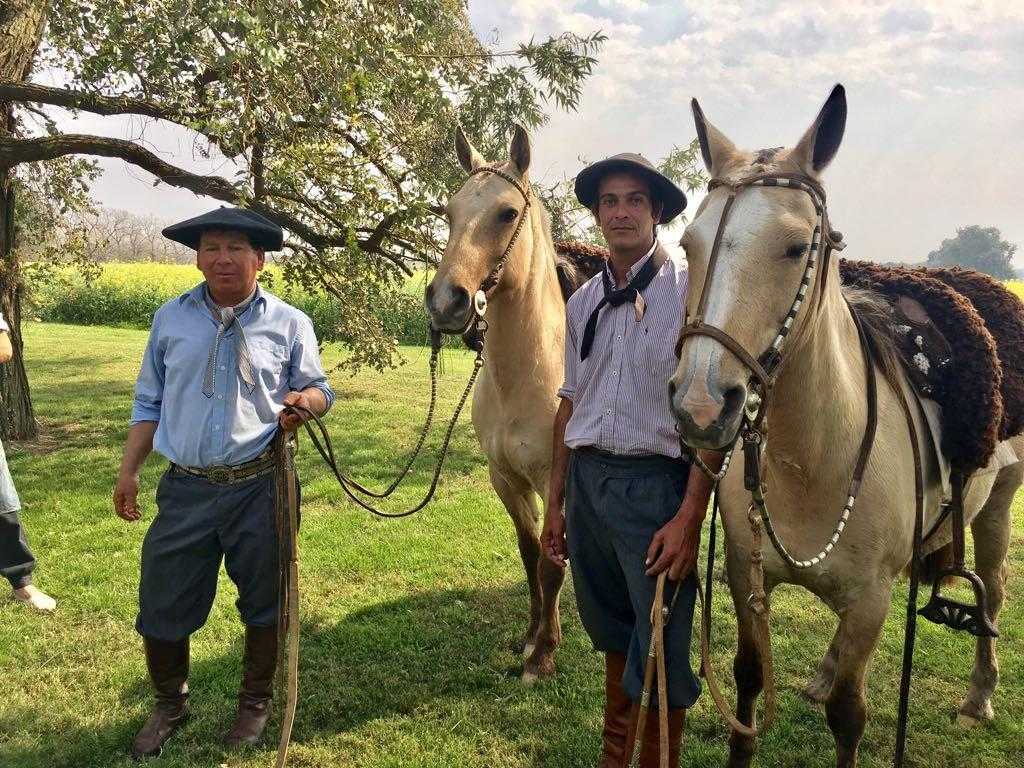
Gauchos dress for the humidity and long rides of the flatlands. We wear bombachas de campo, which are loose, baggy trousers that button at the ankle. They are incredibly comfortable and durable. Instead of a tall hat, we often wear a flat-brimmed hat or a boina (beret). And crucial to our attire is the poncho, which serves as a coat, a blanket, and a shelter.
The Saddle: Western vs. Recado
The connection with the horse is sacred for both, but the saddle technology is distinct.
The Western Saddle used by Cowboys is a solid, heavy structure with a horn for dallying the rope. It is built to hold a rider securely during violent movements and heavy roping work.
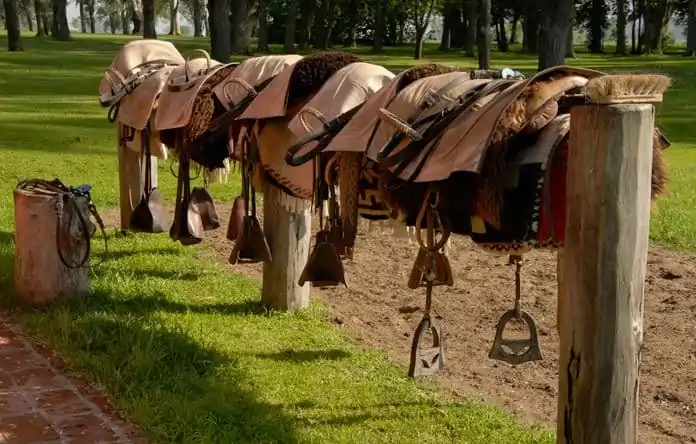
The Gaucho rides on a Recado (or Bastos). It is not a single piece but a layered system of sheepskins, leather, and wool. It is designed to be comfortable for days of riding and, most importantly, the layers can be disassembled at night to serve as the Gaucho’s bed on the open plain.
Lifestyle and Diet: Beans vs. Asado
The day-to-day fuel differs greatly. The Cowboy history is full of chuckwagons serving beans, salted pork, coffee, and biscuits.
Here in Argentina, the Gaucho diet is strictly carnivorous. We live on Asado (roasted meat). Historically, a Gaucho might kill a cow, eat the best cuts roasted over an open fire, and move on.
And we cannot forget the Mate. While Cowboys drank coffee by the gallon, the Gaucho is never without his yerba mate and hot water. It is a ritual of friendship and a source of energy that defines our social interactions.

Philosophy: The Solitary Hero
Ultimately, both figures represent freedom. But the Cowboy is often viewed as a pioneer, a tamer of the frontier who eventually integrates into the ranching industry.
The Gaucho has a more tragic, poetic soul. Historically, we were often outlaws or marginalized figures, celebrated in literature like Martin Fierro or Don Segundo Sombra. We value liberty above all else, often resisting authority and fences. We are the “orphans of the Pampas,” finding solace in the horizon and our horses.
Share in socials
WANT TO KNOW THE 'GAUCHO ARGENTINO'? BOOK A TOUR!
You may also be interested in:

The Real Difference Between Gauchos and Cowboys
While both figures represent the archetypal horseman of the Americas, the main difference between Gauchos and Cowboys lies in their…
Best pork meat in Don Julio
San Antonio de Areco has long been known for its gaucho heritage, artisans, and slow-paced rural charm. But in recent…
The Criollo Knife: The gaucho’s trusted companion on the Pampas
If you’ve ever imagined a lone gaucho riding across Argentina’s endless grasslands, you’ve probably pictured him with a distinctive knife…