


Argentine Gaucho Food Experience: What to Eat, Drink, and Taste in the Pampas
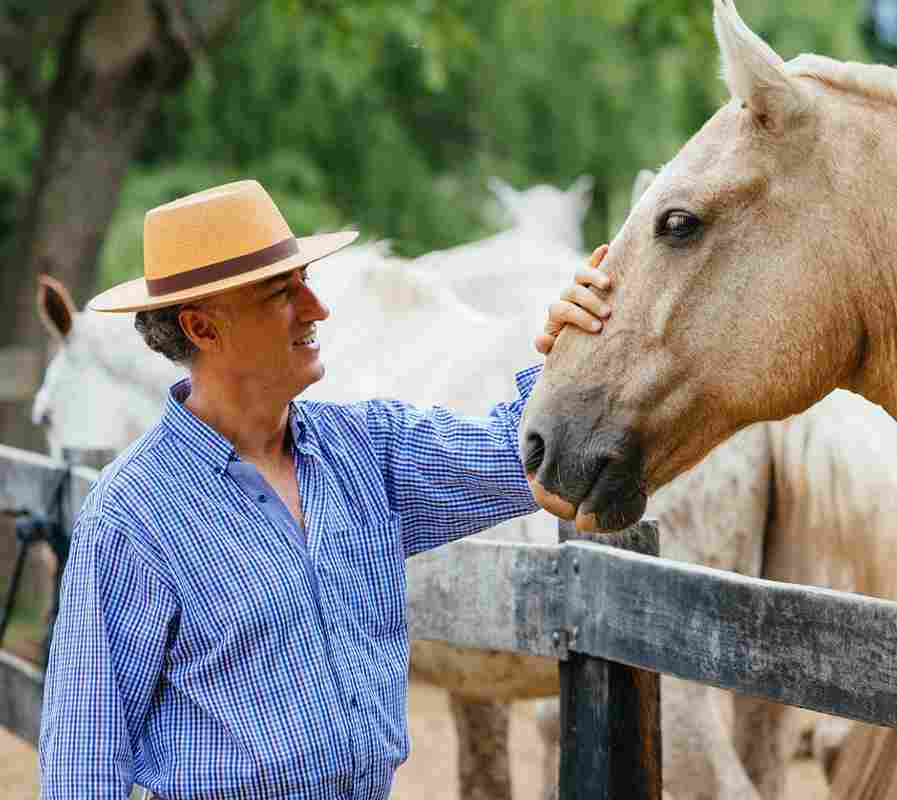
If you’ve ever wondered what Argentines truly eat — beyond the tourist menu — the answer lives in the Pampas. Out here, food isn’t a meal. It’s a language. A slow, generous, fire-lit language spoken around a grill, shared from a single gourd, wrapped in dough by a gaucho’s wife, or sliced from a ham that’s been aging for two years in a cellar on a cobblestoned street.
An Argentine gaucho food experience is not a tasting menu. It’s an immersion into a way of life where every bite carries history, every sip carries ritual, and every table holds a story.
Here’s everything you’ll eat, drink, and discover.
Asado: The center of the Argentine Gaucho Food Experience
No Argentine gaucho food experience begins anywhere other than the fire.
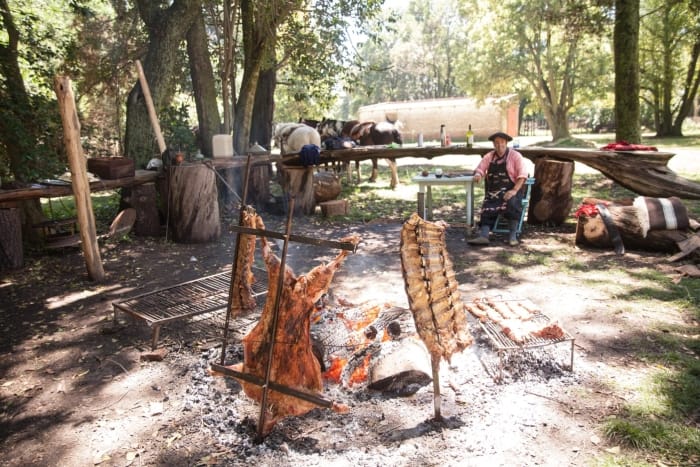
Asado is the heartbeat of the Pampas. Long before it became a national tradition — celebrated every 11 of October like the National Day of Asado— it was a gaucho survival ritual. Skilled horsemen and cattle herders would gather around the open flame at the end of a long day and cook whatever the land offered.
Today, the tradition lives on with the same reverence. The centerpiece is the asado de costilla — large beef short ribs slow-roasted on an iron spit over wood embers, sometimes for four to five hours. The fire does the work; the asador (the grill master) directs it. His role is respected, almost ceremonial: he controls the heat, selects the cuts, and determines the rhythm of the meal.
Alongside the ribs, you’ll find achuras — organ meats like sweetbreads and blood sausage — as well as provoleta (grilled provolone cheese) and chimichurri, the iconic parsley-and-garlic sauce that cuts through the richness of the meat.
The parrillas at Camino Pampa’s Estancias runs to five courses of meat. That’s not excess — that’s tradition.
Empanadas: The Original Gaucho Fast Food
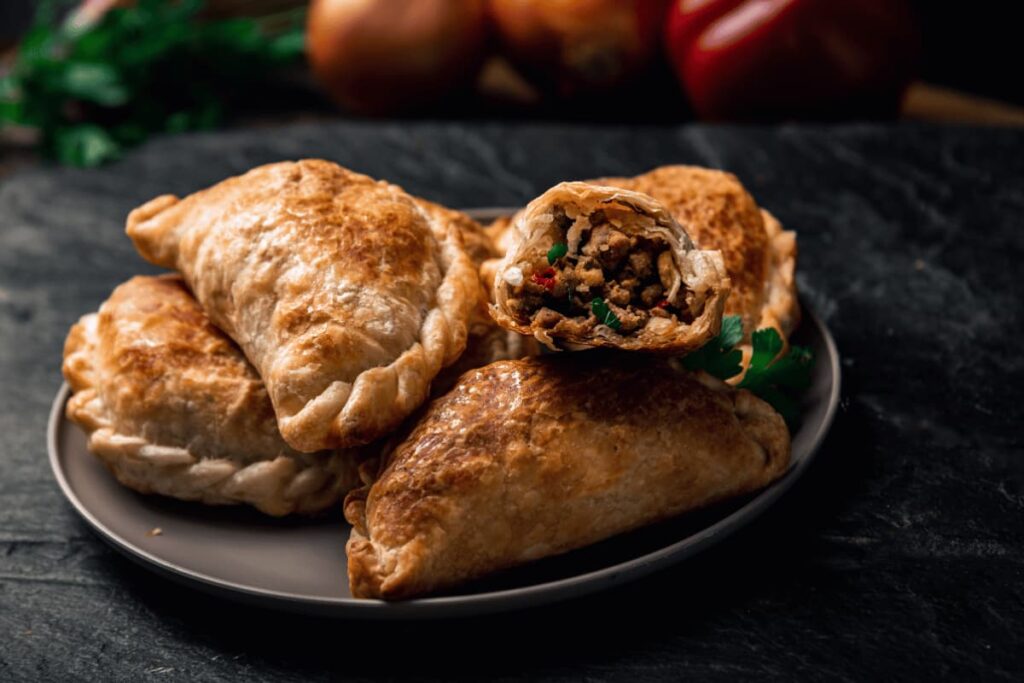
If asado is the main act, empanadas are the welcome. These golden, hand-folded pastry pockets appear at the start of every gathering, passed around while the fire builds and the conversation warms up.
The classic Argentine empanada must be filled with hand-chopped or minced special cut of beef. What makes, along with onions and species, the natural juiciness that defines a great filling.
The classic beef version includes lean beef, caramelized onion, paprika, oregano, raisins, olives, and hard-boiled egg. Each gaucho family guards their exact recipe closely, changing some ingredients according to their sources.
A few rules on eating them like a local:
- Wrap a napkin around it — the juice will run
- Hold it by the tip, bite off the other end first to release steam before it burns you
- Count on one or two per person as a starter, three or four as a main
- Pair with a glass of wine
At estancias in the Buenos Aires province, empanadas are served fresh from the oven, just before the asado gets going — exactly as gauchos have done for ever.
Mate: The Circle of Connection
Somewhere between the empanadas and the asado — or perhaps all day long — there is mate.
Mate is not just a drink. Among gauchos, it’s a social contract. A circle of people, a single gourd, one bombilla (metal straw), and now, in modern times, thermos of water keeping it as possible between 70–80°C. The cebador — the person who prepares and serves — refills and passes the gourd in order. Each person drinks the full serving. When you’re done for good, you say “gracias.” That’s the only polite exit from the circle.
Preparing mate correctly is an art with its own vocabulary:
- Fill the gourd ¾ with yerba mate leaves
- Tilt it at 45 degrees to create a slope
- Pour a little bit of the hot water moistening slowly the base of the gourd gently
- Insert the bombilla into the damp side
- Pour water slowly on that same side, never over the dry yerba, till the level almost reach the top of the herb
One filling of yerba can sustain 15 to 20 rounds of infusion, slowly mellowing in flavor as the session stretches on. On the pampas, gauchos carry a thermos tied to the saddle, on the tractor, truck, etc.. Mate goes wherever the ride takes them.
As a gaucho from the region once said: “Mate isn’t about the taste. It’s about who’s sitting beside you.”
At Camino Pampa, learning to prepare and share mate is part of the experience — using tools made by local artisans, seated on a wooden bench outside the estancia, exactly as generations of gauchos have done before.
Cerdo Rojo: The Best Pork and Charcuterie in the Pampas
The Pampas is cattle country — everyone knows that. But in San Antonio de Areco, something quietly extraordinary has been happening with pork.
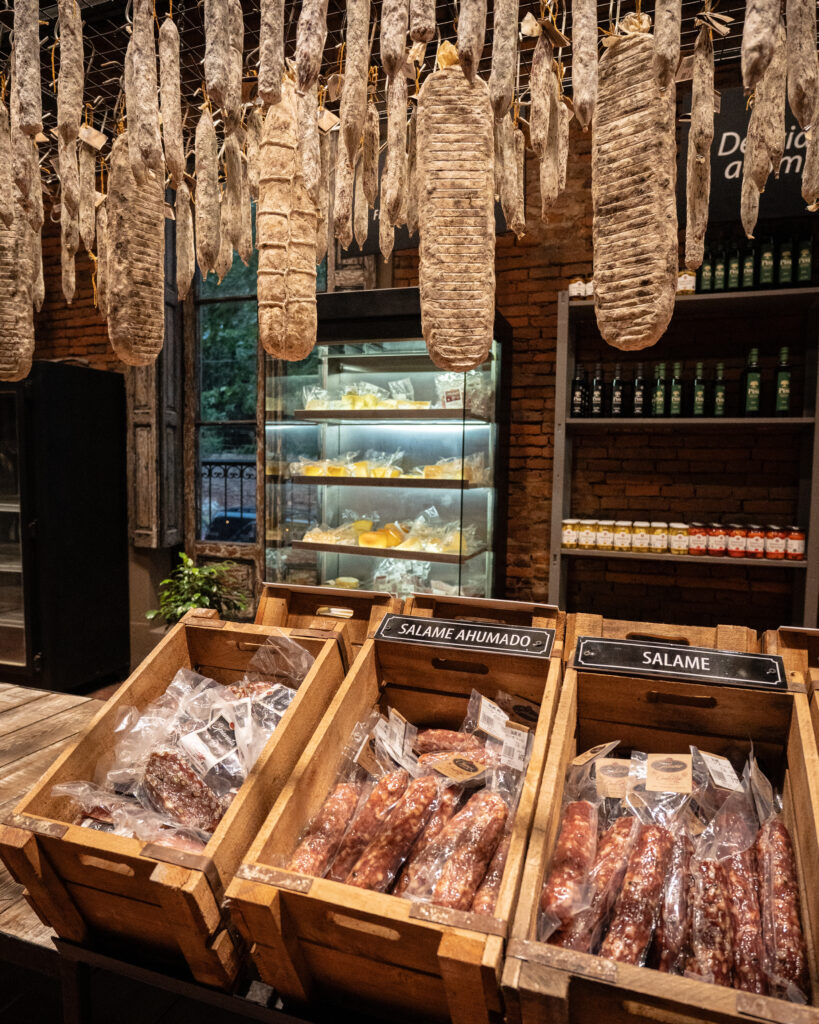
Cerdo Rojo is a charcuterie founded by Guillermo Lloveras and Alberto De Lorenzi, two partners who spent decades working in swine genetics before turning their scientific obsession with flavor into one of Argentina’s most distinctive food projects. Their insight was simple but radical: Argentina had the potential to produce world-class pork, but the industry had long optimized for speed and leanness at the expense of taste.
Their response was to create the pork they envisioned themselves.
Located on the corner of Alsina and Fitte in Areco — a historic building renovated over three years — Cerdo Rojo houses temperature-controlled aging chambers and a underground cellar where hams mature for anywhere from six months to two full years. Nothing is rushed.
What you’ll find inside:
- Boards of salame, chorizo seco, mortadella, Spianata, pâtés, artisan cheeses, and seasonal pickles
- The Don Segundo charcuterie board — a generous sharing selection
- Ham-and-butter sandwiches on fresh bread
- Mortadella with stracciatella and pesto
- In-house pickled vegetables: vinegar chili peppers, baby cucumbers, seasonal preserves
The result isn’t an imitation of Spanish or Italian charcuterie. It’s distinctly Argentine: pigs raised in the Pampas, fed on local grains, shaped by genetic lines refined over years of research.
Camino Pampa incorporates a stop at Cerdo Rojo into the gaucho town portion of the experience — and guests consistently name it one of the highlights of the day.
Alfajores de Areco: The Sweet Symbol of the Pampas
Every food experience needs a sweet ending — and in San Antonio de Areco, that ending comes wrapped in dark chocolate.
The alfajores from La Olla de Cobre have been a local institution for 37 years. The story begins with Carlos Gabba and his wife Teresa, two schoolteachers who noticed that the tourists arriving in Areco had nothing distinctive to take home. Their solution: an alfajor made with real craft — traditional flour-and-butter cookies, a thick layer of old-fashioned dulce de leche, and a coating of dark chocolate made from Ecuadorian and Brazilian cocoa beans processed in-house.
The chocolate process at La Olla de Cobre is meticulous. The cocoa nibs go through melting, refining, concado (the churning process that determines smoothness and fineness), deodorizing, and tempering. The goal: a chocolate so refined that no particle size can be felt on the tongue — only the clean, deep flavor of real cocoa.
Each alfajor weighs 55 grams. They’re made every two weeks, fresh. Carlos now delegates most of the operation to his son Agustín, whom he calls a better chocolatier than himself.
Today, La Olla de Cobre is as much a pilgrimage as a shop. Locals living in Buenos Aires ask relatives to mail them a box. Visiting Areco without taking home a bag of alfajores is, in the local view, a missed opportunity.
On the Camino Pampa gaucho experience, a stop at La Olla de Cobre is part of the town visit — a small, sweet moment that becomes a lasting memory.

Argentine Wine: Tasting the Terroir of the Pampas
No gaucho food experience is complete without wine. Argentina is one of the world’s great wine nations — and at Camino Pampa, tasting that wine in context makes all the difference.
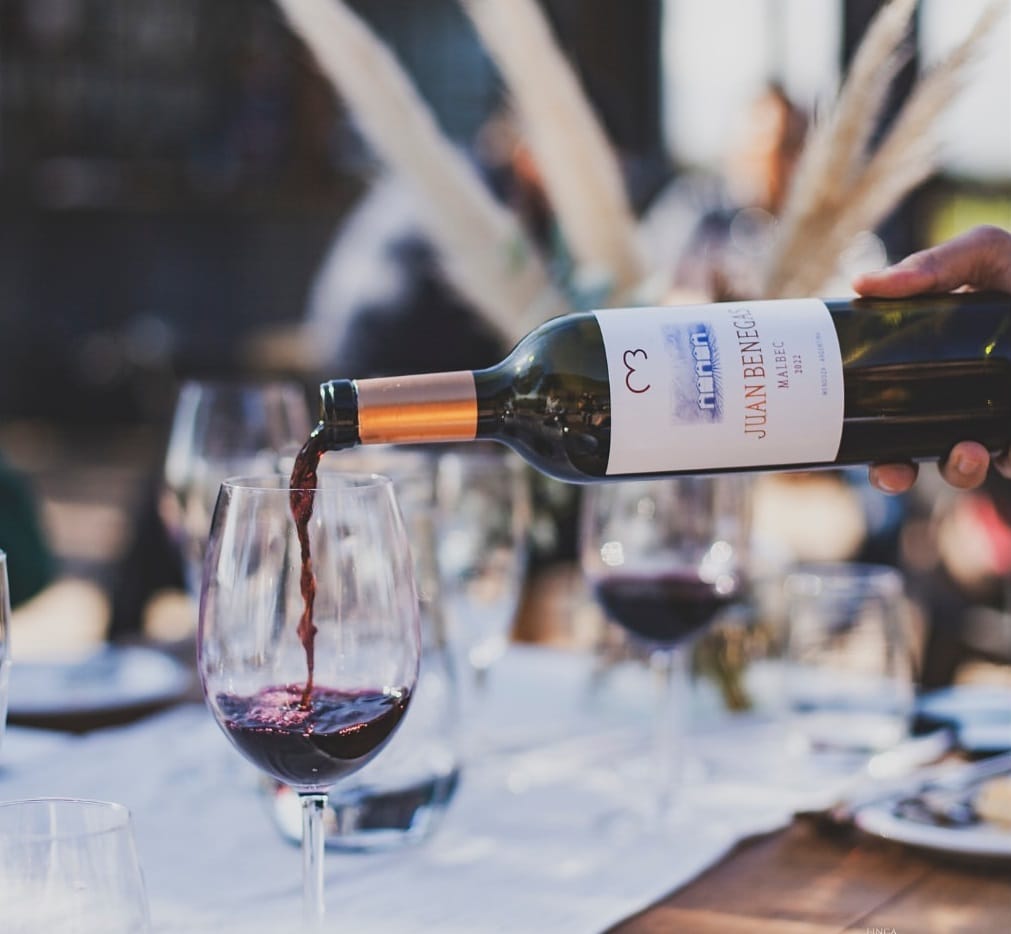
The Wine Tasting & Estancia Day pairs Argentine wines with the gaucho food experience: empanadas, asado, charcuterie from Cerdo Rojo, and the landscape of the Buenos Aires province. A knowledgeable sommelier guides the tasting, walking guests through the diversity of Argentine wine regions and varieties.
Malbec is the classic pairing for red meat — and it earns that reputation alongside a plate of short ribs. But Argentina’s wine map extends well beyond Malbec, and the tasting at Camino Pampa reflects that depth.
As one guest put it: “The sommelier was incredibly knowledgeable, and the staff were warm, welcoming, and attentive.”
Experience It All: The Private Gaucho Experience for Foodies
Everything described in this article — the asado, the empanadas, the mate ritual, the charcuterie at Cerdo Rojo, the alfajores from La Olla de Cobre, and the Argentine wine tasting — comes together in a single immersive day through Camino Pampa’s gaucho experiences.
Based in San Antonio de Areco, just 80 minutes from Buenos Aires, Camino Pampa offers small-group and private tours that go beyond tourism and into genuine cultural immersion. Local guides with deep roots in the region lead every experience. The food is not catered — it’s made fresh, cooked over real fire, and served the gaucho way.
For travelers who want to understand Argentina through its food, this is the experience that delivers.
Share in socials
WANT TO KNOW THE 'GAUCHO ARGENTINO'? BOOK A TOUR!
You may also be interested in:

The Best Cultural Tours in Argentina for First-Time Visitors
First-time visitors to Argentina face a specific problem: too many options, most of them mediocre, and almost no way to…
Estancia Vigil: A Testament to Argentine Winemaking Excellence
How did Alejandro Vigil's journey in winemaking begin? Alejandro Vigil's passion for viticulture ignited during his formative years in Mendoza,…
Vineyard near Buenos Aires Experience
Vineyard near Buenos Aires Experience The Legacy of Colonial Winemaking: A Journey Through Argentina's Vineyards Argentina is celebrated worldwide for…