


The Best Cultural Tours in Argentina for First-Time Visitors
First-time visitors to Argentina face a specific problem: too many options, most of them mediocre, and almost no way to tell the difference before paying for one. The bus pulls up to a ranch where fifty other tourists are waiting. Someone hands you a drink. A man in costume twirls a lasso. You’re back in Buenos Aires by 4pm.
Argentina’s real culture lives in smaller places. In a pulpería where three generations of the same family still gather on weekends. In a milonga where nobody is performing for your camera. In a bodega run by descendants of the Italian immigrants who planted the first vines. This guide is for travelers who want those places, not the ones on the pamphlet rack at the hotel concierge.
Here’s what’s actually worth your time.
The Gaucho Heritage: The Heart of the Pampas
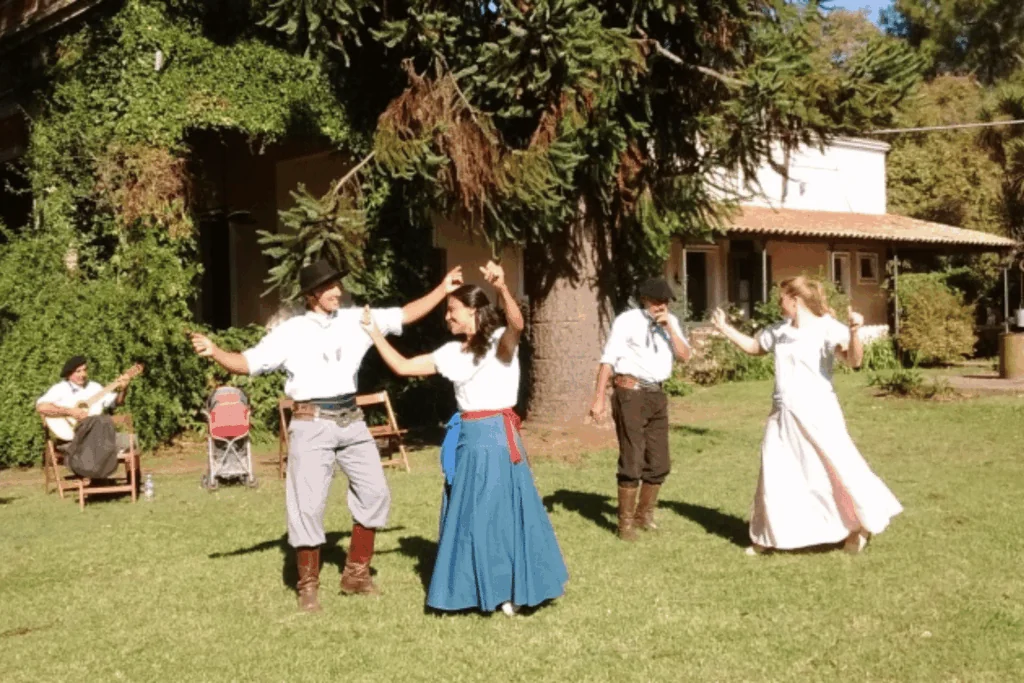
No region in Argentina carries more cultural weight for the country’s identity than the Pampas, and no figure is more central to that identity than the gaucho. To visit Argentina without understanding gaucho culture is like visiting Japan without understanding the samurai tradition: you’ll have a fine trip, but you’ll miss the thread that holds everything together.
San Antonio de Areco is where that tradition is most alive. Located about 80 miles northwest of Buenos Aires, the town has been the undisputed capital of gaucho culture for over three centuries. It’s the site of the annual Fiesta de la Tradición, the largest gaucho festival in the country, held every November, and home to craftsmen who still work in the traditional gaucho style using silver, leather, and bone.
If you have one day outside of Buenos Aires, spend it here.
What to do in San Antonio de Areco
Visit the Museo Draghi. One of the finest collections of traditional gaucho silverwork in the country. The pieces here (facones, espuelas, rastras) are functional objects that were also works of art. The workshop behind the museum is still active. Worth an hour easily.
Find a real pulpería. The pulpería was the social center of rural Argentina: part general store, part bar, part gathering place. A handful of authentic ones survive in and around San Antonio de Areco. Go in, order something, and sit down. The conversations that happen in these places haven’t changed much in a hundred years.
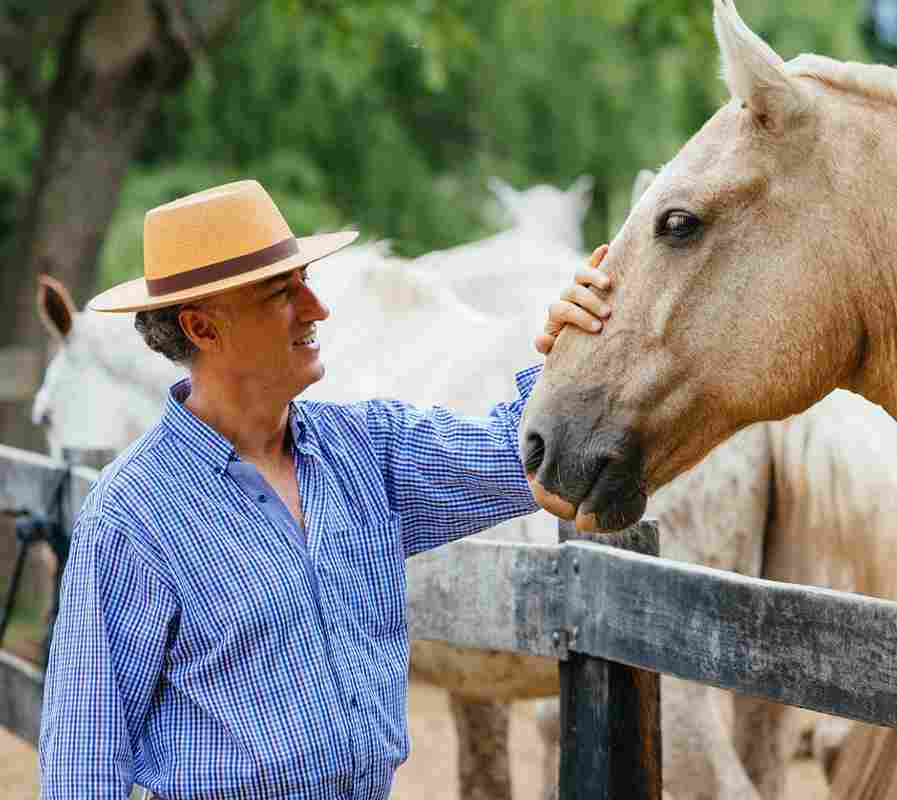
Book time on a working estancia. This is the core of the gaucho experience. Estancias like El Ombú de Areco and La Margarita have been working cattle ranches for generations. A day here means horseback riding across open Pampas, watching (or joining) real ranch work, and sitting down to an asado that takes the better part of three hours to cook properly.
The food matters here more than most tours acknowledge. A proper asado means chorizo and morcilla off the parrilla first, then vacío and costilla cooked low over hardwood, accompanied by chimichurri, crusty bread, and a Malbec that nobody is pretending is fancy. That’s the meal. That’s the culture.
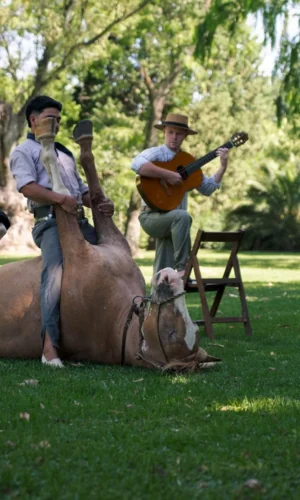
Ask about Doma India. Most commercial rodeos involve breaking horses through force. Some estancias in the Areco region practice doma india, a horse-whispering tradition that trains horses through patience and trust rather than submission. If you have the chance to watch it, do. It’s a better window into gaucho philosophy than any folklore show.
If this is the kind of experience you’re looking for, our estancia day tour from Buenos Aires runs in small groups with local guides who grew up in this world.
The Rhythm of Buenos Aires: Tango and Urban History
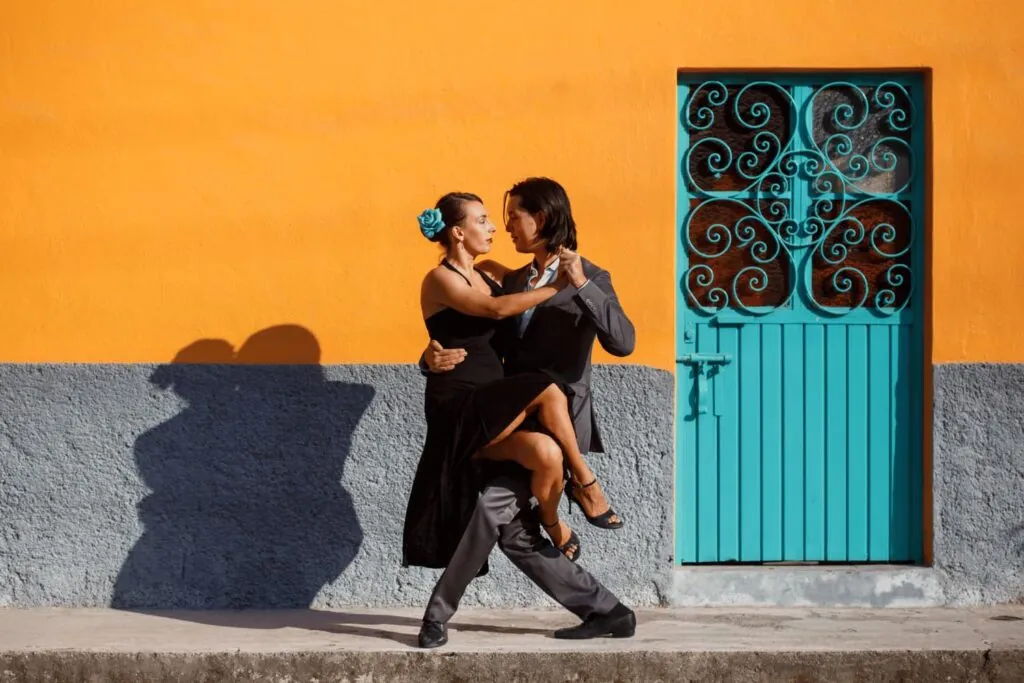
Buenos Aires rewards travelers who ignore the obvious. The big tango shows in Palermo are spectacle: beautifully produced, professionally performed, and almost entirely disconnected from what tango actually is.
Tango is a conversation between two people, improvised in real time, in a room where everyone already knows each other. That’s a milonga. Find one.
The neighborhood of San Telmo is where to start. Its Sunday market draws both tourists and locals, but walk a block off the main drag and the city opens up: old bookshops, corner bars, architecture that still carries the weight of the early 20th century immigration wave that built this place. Buenos Aires received more Italian and Spanish immigrants per capita than almost any city on earth. The streets look the way they do because of that.
Practical tips for Buenos Aires cultural visits:
- Skip the tourist tango shows. Look for milongas in San Telmo or Almagro that start after 11pm.
- Walk La Boca for the architecture and murals, but go past Caminito.
- The MALBA (Museum of Latin American Art) is genuinely excellent. Plan two hours minimum.
- Book a walking tour of Recoleta Cemetery with a guide who knows the political history, not just the famous graves.
The Andean Northwest: Indigenous Culture in Salta and Jujuy
If the Pampas is where European Argentina looks at itself, the northwest is where Argentina confronts its pre-colonial roots.
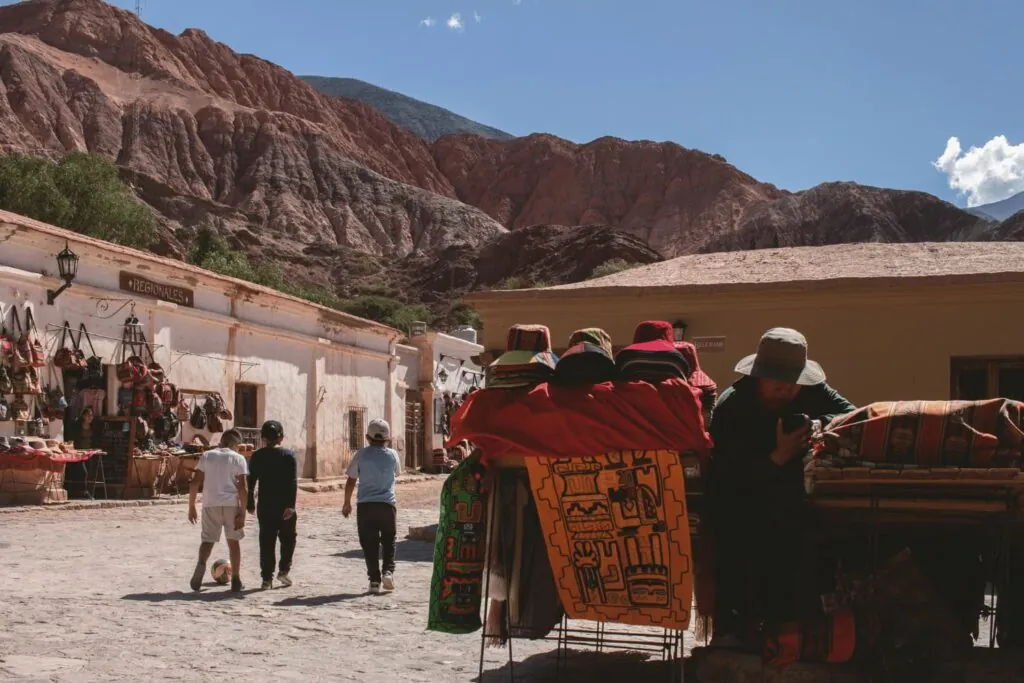
The Quebrada de Humahuaca, a UNESCO World Heritage valley stretching through Jujuy province, is one of the most visually striking landscapes on the continent. Painted hills, ancient villages, and a living Andean culture that predates the Spanish by thousands of years. The Pachamama tradition is still practiced here as a living ritual observed on August 1st with offerings of food, coca leaves, and alcohol.
The food shifts completely here. The northwest is the home of locro (a slow-cooked stew of corn, beans, and pork), humitas (corn tamales), and the empanada salteña, baked with cumin and egg, distinctly different from its Buenos Aires cousin. For anyone building a culinary itinerary of Argentina, Salta belongs on it.
This region requires more time and more intentional planning than a Buenos Aires day trip. Budget at least three days, preferably five.
Mendoza: The Culture of Wine and Harvest
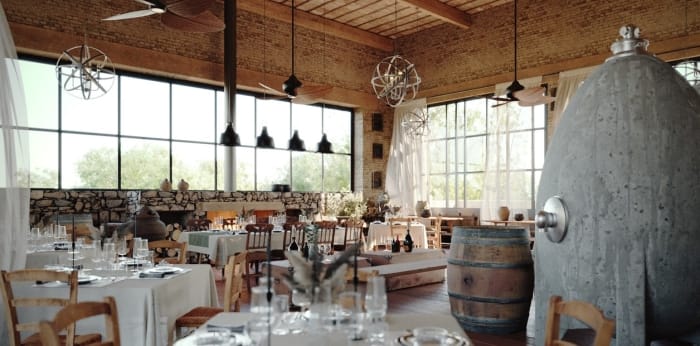
Argentina’s wine industry carries a remarkable origin story: a largely arid, high-altitude desert transformed into the world’s fifth-largest wine producer by waves of Italian, Spanish, and French immigrants who arrived with vine cuttings and stubbornness in equal measure.
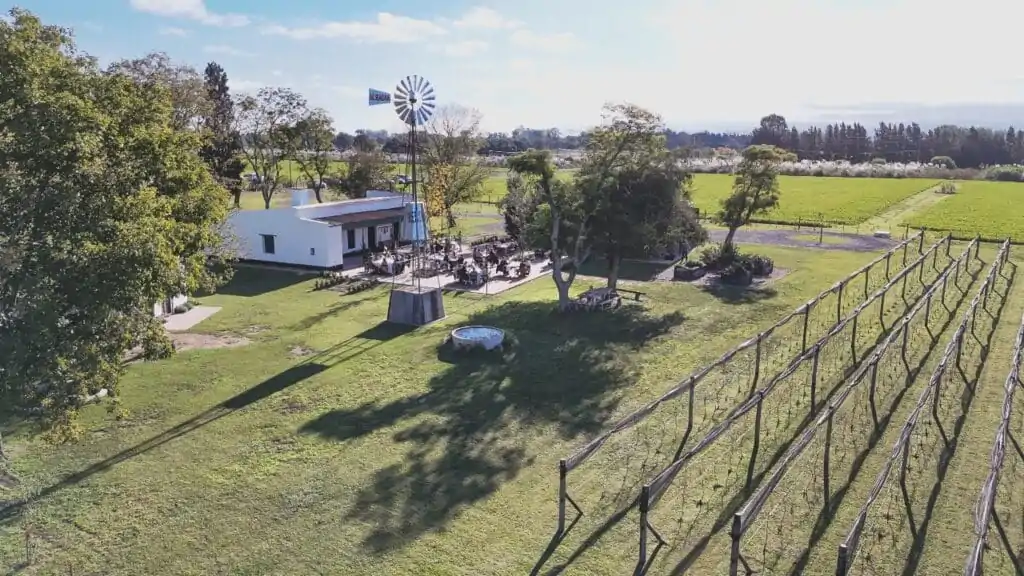
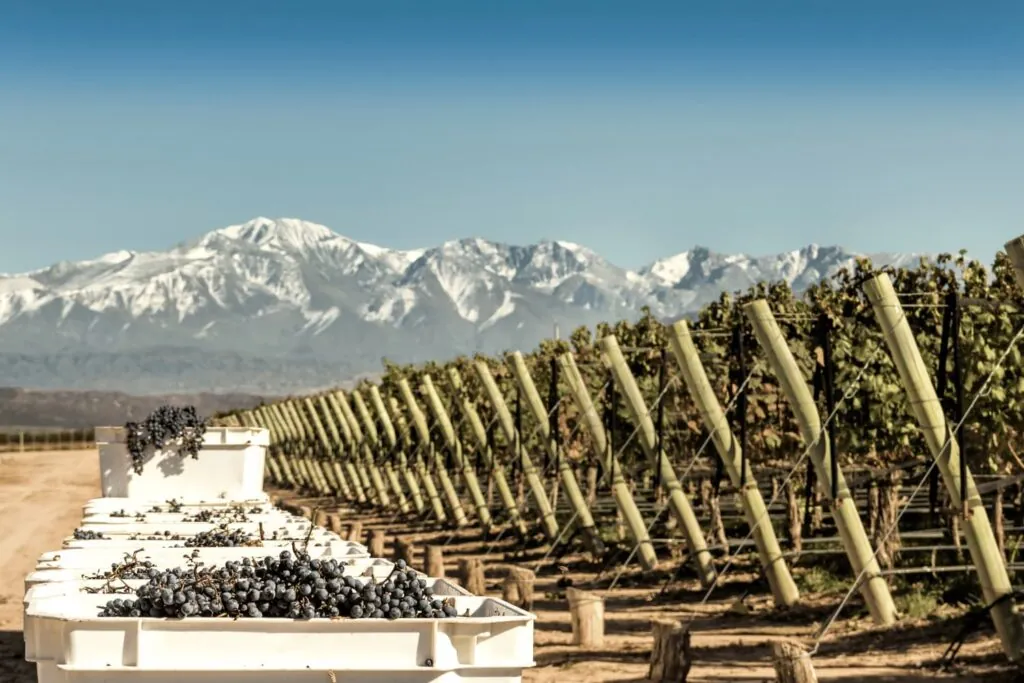
The Malbec grape found its ideal conditions in Mendoza’s altitude and dry climate, producing wines denser and more structured than its French original. The way to understand that story is through a boutique bodega, ideally family-owned, where someone with a stake in the outcome explains what they’re actually doing and why. Large commercial winery tours cover the same ground at less depth.
What to look for in a Mendoza wine tour:
- Wineries with altitude variation across their vineyards (Luján de Cuyo vs. Valle de Uco offer very different soil profiles)
- Harvest season visits (February-April) for anyone interested in the production process
- Blends that include local varieties like Torrontés, not just Malbec
- Guides who can explain the wine, not just pour it
Mendoza pairs well with a detour into the Andes. Horseback riding to the foothills or an early-morning drive toward the Cristo Redentor pass are both worth the effort.
How to Choose the Right Cultural Tour (What to Avoid)
The Argentine tourism market has an oversupply of middlemen and an undersupply of accountability. A tour booked through a hotel concierge or a large online marketplace may pass through three or four operators before it reaches the person actually running the experience, and quality control disappears at every handoff.
A short checklist for evaluating any cultural tour before booking:
Group size. Anything over 20 people for a cultural experience is a logistics operation. Small-group or semi-private options deliver a different level of access and attention. The difference in quality is substantial.
Guide background. Are the guides local to the area or trained in tourism? Both can be good, but local-born guides with deep roots in the community bring something training programs can’t replicate. Ask.
Economic model. Does the tour support local artisans, family-run estancias, and independent restaurants? Ask where the lunch comes from. Ask who owns the estancia.
Transparency about operators. If you’re booking through a platform, who actually runs the experience? If that information isn’t available before you pay, that’s a problem.
Reviews with specifics. Generic five-star reviews carry little weight. Look for reviews that name the guide, describe a specific moment, or explain what surprised them. Those are real.
The tours that hold up to this kind of scrutiny are rarely the cheapest or the most visible. They’re the ones you’ll still be thinking about in six months.
Ready for Your First Argentina Trip?
Argentina rewards the traveler who slows down enough to let the country show itself. The culture lives in the asado that runs three hours longer than expected, in the gaucho who takes twenty minutes to properly saddle your horse because he wants you to be comfortable, in the milonga that doesn’t get interesting until midnight.
If your trip includes Buenos Aires, leave one day free of the city. The Pampas are 80 miles away. The gauchos are still there. The fire takes all morning to get right.
Share in socials
WANT TO KNOW THE 'GAUCHO ARGENTINO'? BOOK A TOUR!
You may also be interested in:

The Best Cultural Tours in Argentina for First-Time Visitors
First-time visitors to Argentina face a specific problem: too many options, most of them mediocre, and almost no way to…
Estancia Vigil: A Testament to Argentine Winemaking Excellence
How did Alejandro Vigil's journey in winemaking begin? Alejandro Vigil's passion for viticulture ignited during his formative years in Mendoza,…
Vineyard near Buenos Aires Experience
Vineyard near Buenos Aires Experience The Legacy of Colonial Winemaking: A Journey Through Argentina's Vineyards Argentina is celebrated worldwide for…